For Teachers
This page brings together thoughtfully crafted images, PDFs, and materials to support foundational learning. These resources are offered as flexible supports to teachers for classroom practice and reflection.
For foundational learning, Bhāratīya Knowledge System-inspired images support children in-
- Observation (see patterns and relationships)
- Relate (connect learning to experienced contexts)
- Reflect (pause, wonder, and ask “why?”)
- Feel Rooted (in civilisation, culture, nation and community)
- Experience Happiness (in the awareness of belongingness)
These materials are intended as open-ended supports. Teachers are encouraged to adapt them based on their classroom context and children’s lived experiences.
Bhāratīya Knowledge System-inspired Themes
Aekyaṃ will develop a curated collection of 3D image cards titled the Rūpaka Bank (rūpaka in Sanskrit means metaphor or symbolic expression), organised around diverse themes, beginning with Nature. Each image card will be accompanied by thoughtfully designed prompt cards to help teachers initiate reflective and inquiry-based discussions in the classroom. Unlike conventional flashcards that focus on recall, the Rūpaka cards act as prompts for children to explore patterns, relationships, and interconnectedness.
First Theme: Nature
Bhūmi Sūktam from the Atharva Veda is used to initiate the classroom discussion.
Veda comes from the Sanskrit root “विद्” (vid), which means “to know”. So, Veda literally means “knowledge”, which is sacred, revealed, and timeless.
The Atharva Veda is one of the four Vedas of the Bhāratīya knowledge tradition, along with the Ṛg Veda, Yajur Veda, and Sāma Veda. It is often considered the Veda closest to everyday life. The Atharva Veda contains hymns, prayers, reflections, and practices related to: Nature and ecological balance, Health and healing, Protection and well-being, Harmony in family and society, etc.
Bhūmi Sūktam is the venerated first hymn (sūktam) from the 12th Kāṇḍa (division) of the Atharva Veda, and is dedicated to the Earth (Bhūmi) as a living, nurturing presence. It describes the Earth as mother, bearer of diverse plants, sustainer of water, and the ground of human existence. It recognises the deep interdependence between soil, rain, vegetation, animals, and human communities, expressing gratitude and responsibility toward the natural world. Rather than considering Earth as a resource to be exploited, Bhūmi Sūktam presents Earth as an interconnected and life-giving whole — inviting humans to live in harmony, humility, and environmental awareness.
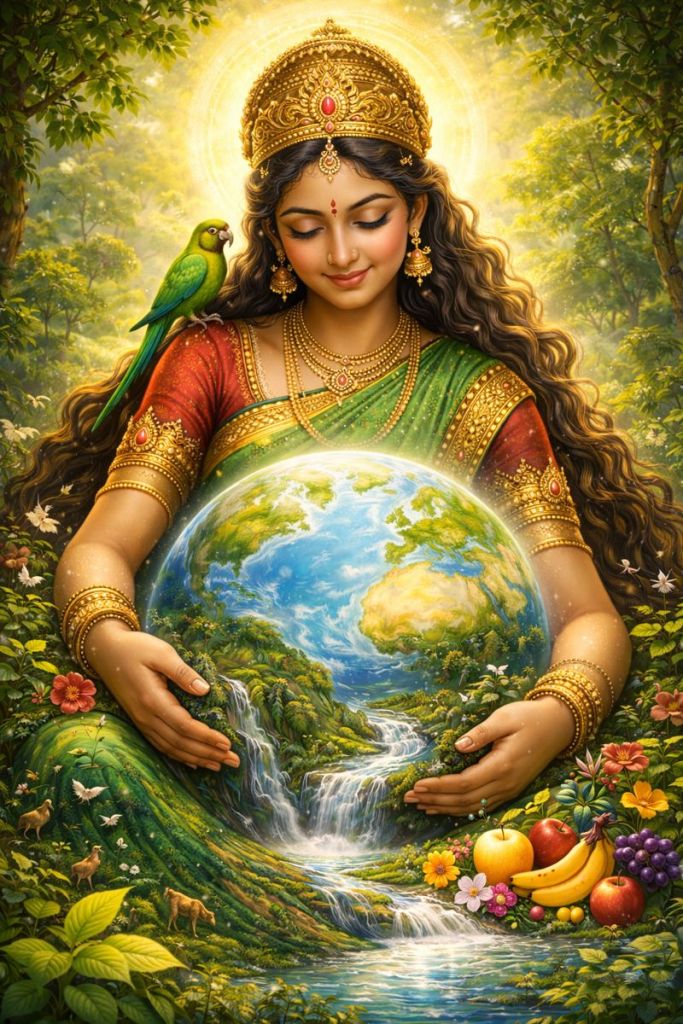
Click here ——> Rūpaka Bank (Bhūmi Sūktam)
Oneness is not sameness.
This page is part of an evolving educational journey.
Last revised: 15 February 2026.
 Aekyaṃ